

Lower back pain is a common issue that affects millions of people worldwide. It can disrupt daily activities and diminish quality of life. Understanding the causes of lower back pain is crucial for effective management and prevention.
Many factors contribute to lower back pain, including muscle strain, poor posture, and a sedentary lifestyle. In females, hormonal changes, pregnancy, and menstrual cycles can also play a significant role. Identifying these triggers can help in finding the right solutions.
Chiropractic care offers a non-invasive, drug-free approach to managing back pain. It focuses on spinal adjustments and personalized treatment plans. Knowing when to seek chiropractic care is essential for preventing chronic pain and improving overall well-being.
Understanding Lower Back Pain: Why It’s So Common
Lower back pain is an incredibly prevalent condition. Its pervasiveness can be attributed to the complexity and centrality of the lower back in daily movement. This area acts as a crucial support for the upper body.
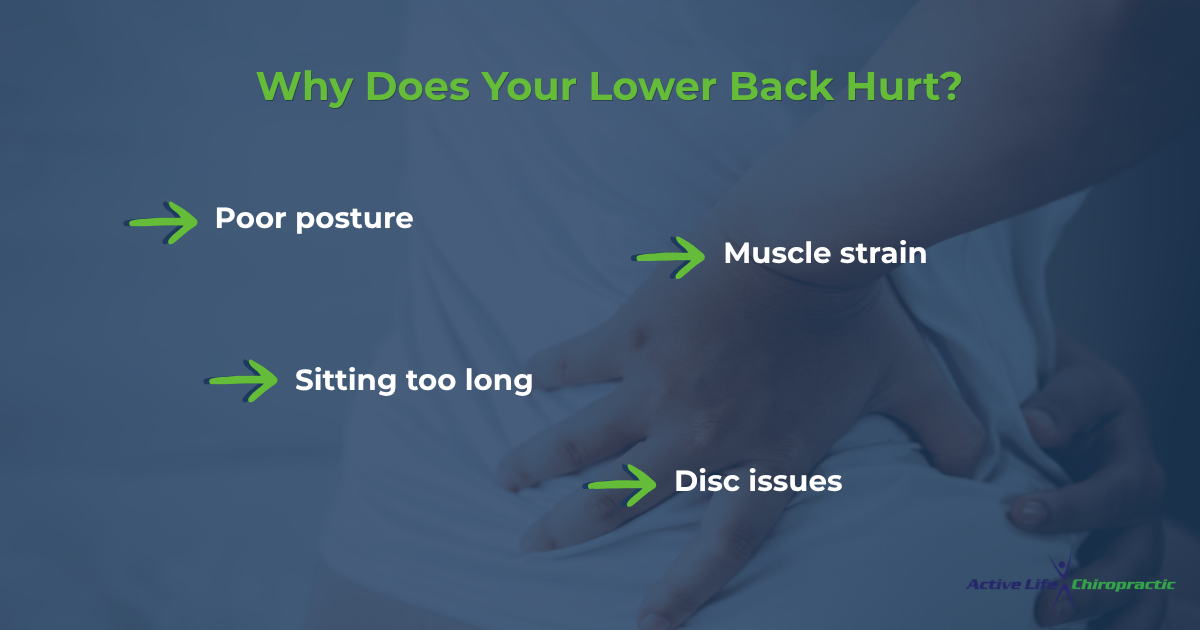
Several factors make lower back pain common. First, our modern lifestyle involves prolonged sitting, which strains the lower back. Physical inactivity also weakens back muscles, making them prone to injury.
The commonality of lower back pain also stems from its various causes. These include:
- Muscle strain or sprain
- Herniated discs
- Degenerative diseases like arthritis
- Poor posture habits
Stress and emotional factors often exacerbate back pain. It can lead to tension that impacts the back’s soft tissues. Additionally, lower back pain is not limited to older individuals; it affects people of all ages, making awareness vital. Recognizing the everyday factors contributing to this type of pain can aid in its prevention. Understanding these underlying causes can guide better lifestyle and health choices, minimizing the incidence of lower back pain in the long term.
Common Causes of Lower Back Pain
Lower back pain can arise from multiple factors. These causes may vary between individuals due to lifestyle, health conditions, and daily habits. Understanding them is crucial for effective prevention and treatment.
One common trigger is muscle strain. This often happens due to heavy lifting or sudden movement. Poor posture, such as slouching at a desk, can also contribute significantly.
Back pain often results from structural issues. Herniated discs and arthritis are frequent culprits. These conditions can cause intense pain and discomfort, disrupting daily activities.
Additional factors include:
- Sedentary lifestyle
- Obesity
- Poor workplace ergonomics
Smoking can surprisingly lead to lower back pain. It reduces blood flow to the spine, increasing vulnerability to injury. Stress is another overlooked cause, as it often leads to muscle tension in the back.
Recognizing these common triggers can empower you to make informed choices. Lifestyle changes like regular exercise and ergonomic improvements can be effective preventative measures. If pain persists, consulting a healthcare professional is advisable. Understanding the specific cause of your pain will aid in creating a tailored treatment plan. This approach ensures long-term relief and improved quality of life.
What Causes Lower Back Pain in Females?
Lower back pain can affect men and women differently. Certain factors are unique to females and contribute to their experience of back pain. Identifying these causes is essential for targeted treatment.
Hormonal fluctuations in females can play a key role. For instance, hormonal changes during the menstrual cycle can lead to lower back discomfort. Similarly, conditions such as endometriosis can exacerbate pain.
Pregnancy is another major factor. The additional weight and changes in posture significantly impact the lower back. This can lead to both acute and chronic pain if not addressed properly.
Specific causes in females include:
- Hormonal changes
- Pregnancy-related stress
- Menstrual cycle
Females are also at a higher risk for osteoporosis. This condition causes bones to weaken, leading to fractures in the spine and back pain. Furthermore, emotional stress and anxiety, sometimes more prevalent in women due to societal pressures, can intensify the perception of pain.
Understanding these gender-specific factors helps in managing and mitigating back pain effectively. Women should consider lifestyle adjustments and consult healthcare providers as needed. Tailored chiropractic care can often provide significant relief by addressing these unique causes. A proactive approach can vastly improve a woman’s quality of life and mobility.
Lifestyle Factors and Habits That Trigger Back Pain
Our daily habits significantly influence our spinal health. Surprisingly, many common routines can contribute to or worsen lower back pain. Identifying these habits is the first step toward alleviating discomfort.
A sedentary lifestyle is a major contributor to back pain. Sitting for prolonged periods can place undue stress on the lower back. Without regular movement, muscles weaken, losing their ability to support the spine properly.
Poor ergonomics in the workplace or home environment also play a crucial role. Improper desk setups or non-supportive chairs can lead to chronic strain. This can worsen over time if not corrected.
Additional lifestyle factors to consider include:
- Lack of regular exercise
- Excess weight or obesity
- Improper lifting techniques
By adjusting these habits, individuals can significantly reduce the risk of developing lower back pain. Simple changes like incorporating regular exercise and maintaining a supportive seating arrangement can make a big difference. These proactive steps can help maintain a healthy spine and enhance overall well-being.
When Should You See a Chiropractor for Lower Back Pain?
Deciding when to seek professional care for lower back pain can be confusing. While mild discomfort might resolve on its own, persistent pain requires attention. Recognizing when to visit a chiropractor is crucial to prevent chronic issues.
Key red flags include pain that persists beyond a few weeks. If your discomfort is severe or if it disrupts daily activities, professional care is needed. Other warning signs are numbness, tingling, or weakness in the legs, which may indicate nerve involvement.
If over-the-counter pain medications or home remedies aren’t providing relief, it’s time to consult a chiropractor. Their expertise in spine health can identify underlying causes. This allows them to create targeted treatment plans aimed at alleviating pain and restoring mobility.
Consider seeing a chiropractor if:
- Pain is worsening despite self-care
- There’s an inability to perform routine tasks
- The pain follows an accident or trauma
Early intervention is key. By addressing problems promptly, a chiropractor can help prevent further deterioration and enhance quality of life.
How Chiropractic Care Helps Relieve Lower Back Pain
Chiropractic care offers a non-invasive solution to alleviate lower back pain, focusing on spine health and function. By using various techniques, chiropractors can help reduce pain and enhance mobility.
One primary method is spinal adjustments, which realign the spine to relieve pressure on nerves. This not only reduces discomfort but also improves overall spinal functionality. Chiropractors can pinpoint and address the root causes of pain, leading to effective relief.
Beyond adjustments, chiropractors may employ complementary therapies such as massage or exercises to support recovery. These additional techniques help decrease muscle tension and increase flexibility, promoting overall back health.
A visit to a chiropractor can also include personalized advice on lifestyle changes. Patients gain valuable insights into posture, ergonomics, and exercises tailored to prevent future pain episodes.
In summary, chiropractic care encompasses a holistic approach:
- Spinal adjustments
- Complementary therapies like massage
- Lifestyle modification guidance
- Customized exercise routines
These elements work together to support a pain-free, healthy back.
Chiropractic Techniques for Lower Back Pain
Chiropractors utilize several specialized techniques to manage lower back pain effectively. Each method caters to different underlying causes and patient needs, ensuring personalized care.
One popular technique is the Diversified technique, involving precise manual adjustments. This approach aims to restore proper spinal alignment, enhancing nerve function. Another effective method is the Flexion-Distraction technique, ideal for patients with herniated discs or spinal stenosis.
Soft tissue therapy further complements these techniques by targeting muscle and ligament tension. Through hands-on manipulation, chiropractors relieve tightness and promote healing.
Common chiropractic techniques for lower back pain include:
- Diversified Technique: Standard spinal adjustment
- Flexion-Distraction: Gentle, non-thrusting adjusting
- Soft Tissue Therapy: Relaxes muscles and ligaments
These techniques, when combined, offer a comprehensive strategy to address lower back pain, improving overall quality of life.
Prevention: Tips for a Healthy, Pain-Free Back
Preventing lower back pain often involves making simple lifestyle changes. By being mindful of daily habits, you can significantly reduce your risk of experiencing back discomfort.
Regular exercise is crucial for maintaining a strong and flexible back. Activities like walking, swimming, and yoga enhance muscle strength and promote spinal health. Aim for at least 30 minutes of moderate exercise most days.
Additionally, proper posture plays a vital role in preventing back pain. Whether sitting at a desk or standing, maintaining a straight back and aligning your shoulders helps reduce spinal strain. Frequent breaks from long periods of sitting can also prevent stiffness and pain.
Incorporate these preventive measures into your routine:
- Exercise regularly: Engage in strengthening and stretching exercises.
- Mind your posture: Stay aware of your alignment throughout the day.
- Take breaks: Move and stretch to avoid prolonged static positions.
- Maintain a healthy weight: Extra weight can strain the lower back.
Adopting these habits can keep your back healthy and free of pain, improving overall well-being.
Taking the Next Step Toward Lower Back Pain Relief
Lower back pain can have many causes, from everyday habits like prolonged sitting and poor posture to muscle strain, spinal conditions, or changes within the body. Understanding what may be contributing to your discomfort is an important first step toward finding the right approach for relief.
While some back pain improves with rest and simple lifestyle changes, ongoing or recurring pain may require a more personalized solution. A chiropractor can help evaluate your symptoms, identify potential contributing factors, and develop a care plan designed around your specific needs and goals.
At Active Life Chiropractic, we focus on helping patients improve mobility, reduce discomfort, and support long-term spinal health through personalized chiropractic care. If lower back pain is affecting your daily life, schedule a consultation today to learn how we can help you get back to moving comfortably. Schedule your consultation with Active Life Chiropractic today!
Frequently Asked Questions
What is the most common cause of lower back pain?
The most common causes of lower back pain include muscle strains, poor posture, prolonged sitting, improper lifting techniques, and reduced core or back muscle strength. Other factors, such as disc issues or arthritis, can also contribute to ongoing discomfort.
How do I know if my lower back pain requires a chiropractor?
You may benefit from seeing a chiropractor if your lower back pain lasts more than a few weeks, interferes with daily activities, keeps returning, or is accompanied by symptoms like numbness, tingling, or weakness. A chiropractor can help identify potential causes and recommend appropriate care.
Can chiropractic care help with lower back pain?
Chiropractic care may help many people experiencing lower back pain by improving spinal mobility, reducing discomfort, and addressing contributing factors such as movement patterns, posture, and muscle tension. A chiropractor can create a personalized treatment plan based on your symptoms and goals.